Empowering a Million Minds on the Edge of AI
Join the movement to make edge AI knowledge accessible to all—through live workshops, real-world challenges, and learning experiences designed for the future.
The EDGE AI FOUNDATION is a vibrant, global community. Discover the best way for you to connect and contribute.
EDGE AI FOUNDATION is Creating the Movement

Certifications & Training
Advance Your Edge AI Expertise
From introductory fundamentals to advanced practitioner programs — explore our growing catalog of industry-recognized certifications, available in multiple languages.
Build Your Edge AI Credentials
The EDGE AI FOUNDATION is launching a global certification and badge system designed to recognize real-world impact—on the job, in the lab, and across our community. Whether you’re completing foundational training, entering challenges, speaking at events, or collaborating in working groups, your contributions should be visible, verifiable, and valued.
Badges and certifications are more than digital stickers—they’re proof that you’re building what’s next at the edge.
Be one of the first to explore our certification path and earn your first badge.
EDGE AI Scholarship Program
EDGE AI SCHOLARSHIP programs provide travel grants for EDGE AI events and underwrite efforts to accelerate learning and literacy around the world, including education programs like the one we recently supported in Malawi:
EDGE AI Scholarship Programs are supported by our Strategic Partners as well as our Scholarship Partners who provide value-added services to our community while contributing to the growth of the fund. You can apply to the EDGE AI Scholarship Programs by using the form below.

EDGE AI Labs
EDGE AI Labs provides a resource to leverage community code for datasets, models and blueprints for solutions. Hosted by embedUR’s ModelNiova platform, it’s a great place to start for professional and academic developers
- Provide a level-playing field for academia/Industry researchers to be able to evaluate the quality/perf of their proposed algorithms/NNs
- Focus on a high-quality community-curated open-source datasets for training of small NNs with dedicated tasks
- Provide a platform to share algorithms/NNs/Papers using these datasets and build on each other’s work
EDGE AI Challenges
A worldwide challenge series that takes a flexible, solutions-centric approach to edge AI. This program pushes the boundaries of innovation, encouraging participants from around the world.
We partnered with Hackster and embedUR to bring these challenges to a worldwide ecosystem of developers in industry and academia.
We recently awarded the winners of the Earth Guardians EDGE AI Challenge in Taipei, Taiwan – congratulations! Check back soon for the latest EDGE AI Challenge!
EDGE AIP - Academia and Industry Partnership
The EDGE Academia-Industry Partnership (EDGE AIP) now bridges the academic world and edge AI industry by empowering everyone with knowledge and opportunities from tinyML to the edge of AI. EDGE Academia-Industry Leadership team navigates the educational opportunities for our community worldwide:
Brian Plancher (Chair) is an Assistant Professor of Computer Science at Dartmouth College. He was previously an Assistant Professor of Computer Science at Barnard College where he also held affiliate positions in the Department of Computer Science and Electrical Engineering at Columbia University.

Charlotte Frenkel, Assistant Professor, TU Delft. Charlotte Frenkel leads research at TU Delft on neuromorphic intelligence and hardware-algorithm co-design. Her work focuses on bridging bio-inspired approaches with engineering to develop ultra-low-power accelerators and on-device learning. She is a co-lead of the NeuroBench initiative and serves as a program co-chair for the tinyML Research Symposium.
Dhireesha Kudithipudi, Professor & Director of MATRIX AI Consortium, UT San Antonio. Dhireesha Kudithipudi is the Robert F. McDermott Endowed Chair at UTSA and the founding Director of the MATRIX AI Consortium. Her research focuses on neuromorphic computing, lifelong learning, and the development of energy-efficient AI architectures. She also leads the THOR project, the first open-access neuromorphic computing hub in the U.S.
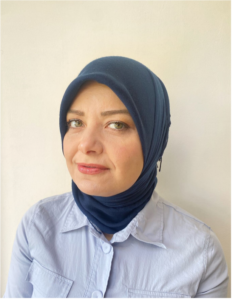
Eiman Kanjo is a Professor of Pervasive Sensing and the head of the Smart Sensing Lab. Eiman has been appointed as the Provost’s Visiting Professor in tinyML at Imperial College London starting October 2023. She has recently been honored as one of the Top 50 Women in Engineering by the Women in Engineering Society.
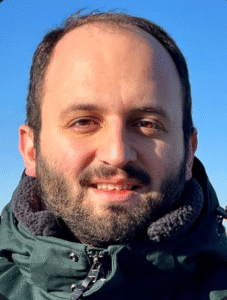
Francesco Conti, Associate Professor, University of Bologna. Francesco Conti is an Associate Professor at the University of Bologna and a core developer of the open-source PULP (Parallel Ultra-Low-Power) Platform. His research centers on novel hardware architectures and tools that enable deep learning on ultra-low-power systems-on-chip. He has spearheaded the development of over 15 SoC prototypes designed for energy-efficient perceptive intelligence.
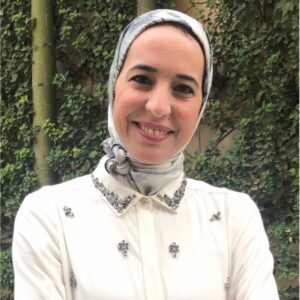
Hajar Mousannif is an associate professor and coordinator of the Master program in Data Science within the department of computer science at the Faculty of Sciences Semlalia (Cadi Ayyad University, Morocco). She holds a PhD degree in computer Sciences on her work on Wireless Sensor Networks and Vehicular Networks.

Marcelo Rovai holds a Master’s degree in Data Science by the UDD in Chile, as well as an MBA by IBMEC (INSPER) in Brazil. He graduated in 1982 as an Engineer from UNIFEI with a specialization from Poli/USP, both institutions are located in Brazil.

Marco Zennaro is a research scientist at the Abdus Salam International Centre for Theoretical Physics in Trieste, Italy, where he coordinates the Science, Technology and Innovation Unit. He received his PhD from the KTH-Royal Institute of Technology, Stockholm, and his MSc degree in Electronic Engineering from the University of Trieste.
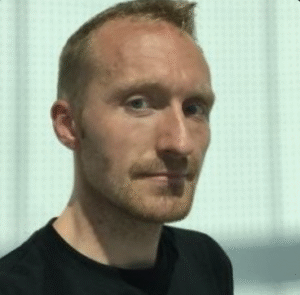
Morten Opprud Jakobsen, Researcher & Engineer, Aarhus University. Morten Opprud Jakobsen specializes in the practical implementation of Edge AI and energy-efficient embedded systems at Aarhus University. His research focuses on low-power communication and predictive maintenance through MEMS technology. He is dedicated to bridging the gap between theoretical machine learning and robust, field-deployable hardware.
 Tinoosh Mohsenin is an Associate Professor in Electrical and Computer Engineering at Johns Hopkins University and Director of the Energy Efficient High Performance Computing Lab. Her research focus is on energy-efficient computing for signal processing and machine learning used in autonomous systems and smart health monitoring. She is the chair of the academic engagement committee and the 2026 Academic Partner of the year.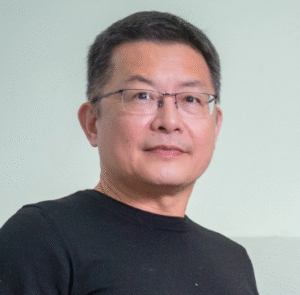
Winston Hsu, Professor, National Taiwan University. Winston Hsu is a Professor at National Taiwan University and a veteran AI technologist with experience leading industrial ventures like MobileDrive. His expertise spans computer vision, embodied AI, and the integration of perception and reasoning for automotive systems. He was the founding Director of the NVIDIA AI Lab at NTU and remains a leader in industrial AI collaboration.
EDGE AI Career
EDGE AI Career is a new set of programs and livestreams dedicated to exploring and illuminating career paths in the edge AI industry. We’ll bring insights from industry leaders, share success stories, and provide guidance on how to thrive in this rapidly evolving field.
As part of our commitment to building a strong talent pipeline, we’ll also connect learners with career opportunities, industry mentors, and hiring partners looking for the next wave of edge AI innovators.
EDGE AI Learning Resources
Here are more resources to help you get started on your learning journey with edge AI:
- MLSYSBOOK.AI is an open source curriculum for edge AI
- Edge AI Engineering is an open source textbook
- Tech Diplomacy Academy by the Krach Institute
- Fundamentals of tinyML is a course on HarvardX
- Introduction to Embedded Machine Learning on Coursera
- Edge AI Fundamentals from Edge Impulse
- NVIDIA Graduate Fellowships
- Applied AI and Data Science Program at M.I.T.
- Professional Certificate in Machine Learning and Artificial Intelligence at UC Berkeley
- Machine Learning Crash Course from Google
- Introduction to machine learning from Microsoft
- Post Graduate Program in AI & Machine Learning: Business Applications from UT Austin